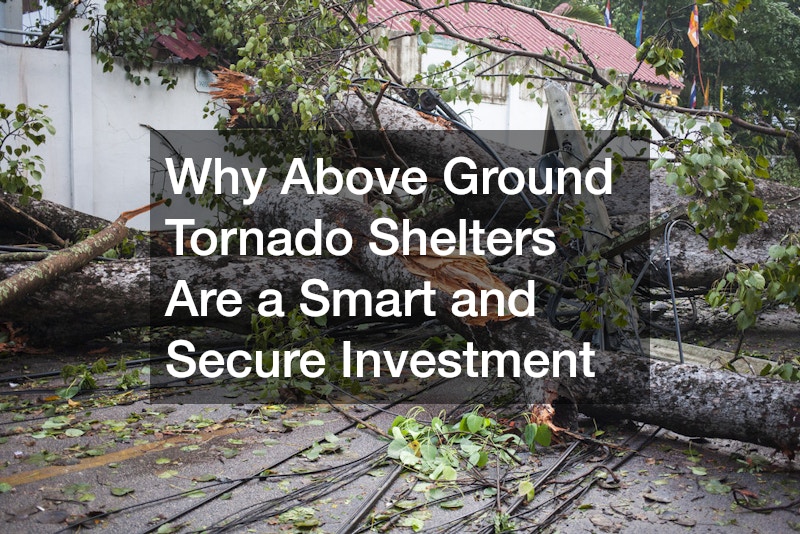
Tornadoes can develop quickly, giving homeowners and families limited time to find adequate protection. While traditional storm cellars and underground shelters have long been used for severe weather, modern shelter options can provide another practical solution. Above ground tornado shelters offer strong protection while making installation and access more convenient for many properties.
Homeowners in tornado-prone areas, preparing before severe weather strikes can make a significant difference. A dedicated shelter provides a dependable refuge when threatening conditions develop with little warning.
Understanding the benefits of a secure shelter can help homeowners make informed decisions about preparing for dangerous storms.
Reliable Protection During Severe Weather
The primary purpose of a tornado shelter is to provide a reinforced space where people can seek refuge when extreme winds threaten a home or community. Properly engineered tornado shelters are designed to withstand powerful wind forces and flying debris that can accompany a tornado. Their reinforced construction provides a substantially stronger protective environment than many ordinary rooms inside a house.
A shelter can also provide an important layer of protection when a tornado warning arrives with little notice. Instead of searching for a suitable location throughout the home, occupants can move directly into a designated, reinforced space. Having a clearly established shelter area can make emergency preparation more straightforward, particularly when every minute matters.
Construction quality is especially important when selecting a shelter. Homeowners should look for products designed and tested according to recognized storm shelter standards. Features such as reinforced walls, secure doors, strong anchoring systems, and properly designed ventilation can all contribute to the shelter’s performance during severe weather.
Convenience Without Sacrificing Security
One major advantage of an above ground design is accessibility. Underground shelters may require substantial excavation, specialized drainage solutions, or structural modifications to a property. By comparison, above ground shelters can often be installed in locations that would not be practical for an underground structure. This flexibility can make them suitable for a wider range of homes and properties.
Accessibility can be particularly valuable for people who have mobility limitations or difficulty using stairs. Entering a shelter at ground level can eliminate some of the physical challenges associated with descending into an underground space. Families can also benefit from having a shelter that is easy to locate and reach from common areas of the home.
Above ground tornado shelters can also be incorporated into different property layouts. Depending on the design, a shelter may be installed inside an existing garage, attached to a structure, or positioned in another accessible area. This gives homeowners more options when determining where their emergency protection should be located.
Long-Term Value and Emergency Preparedness
Investing in a dedicated storm shelter is about more than preparing for one particular storm. Severe weather can occur repeatedly over the course of a property’s lifespan, making permanent protection a potentially valuable component of an overall emergency preparedness strategy. A properly maintained shelter can remain available whenever dangerous conditions develop.
A dedicated shelter may also provide greater peace of mind than relying solely on interior rooms. Although homeowners should always follow official weather warnings and emergency guidance, having a purpose-built refuge provides a designated location for responding to a tornado threat. Families can establish procedures in advance so everyone knows when and where to take shelter.
The investment can also complement other preparedness measures. Homeowners can keep emergency supplies, flashlights, communication devices, and other appropriate necessities nearby so they are readily available during severe weather. Regularly inspecting the shelter, keeping its entrance unobstructed, and ensuring that household members understand how to use it can help maintain its readiness.
Ultimately, above ground tornado shelters can combine durable construction, convenient access, and long-term practicality. Choosing a professionally designed and properly installed shelter allows homeowners to create a dedicated refuge without necessarily undertaking the extensive excavation associated with underground alternatives.
Tornado preparedness begins with recognizing the risks associated with severe weather and taking practical steps before an emergency occurs. A well-designed shelter can give households a secure location to use when a tornado threatens, while its accessible design can simplify emergency response. For homeowners seeking a durable addition to their storm preparedness plans, an above ground shelter can be a smart investment in safety and security.